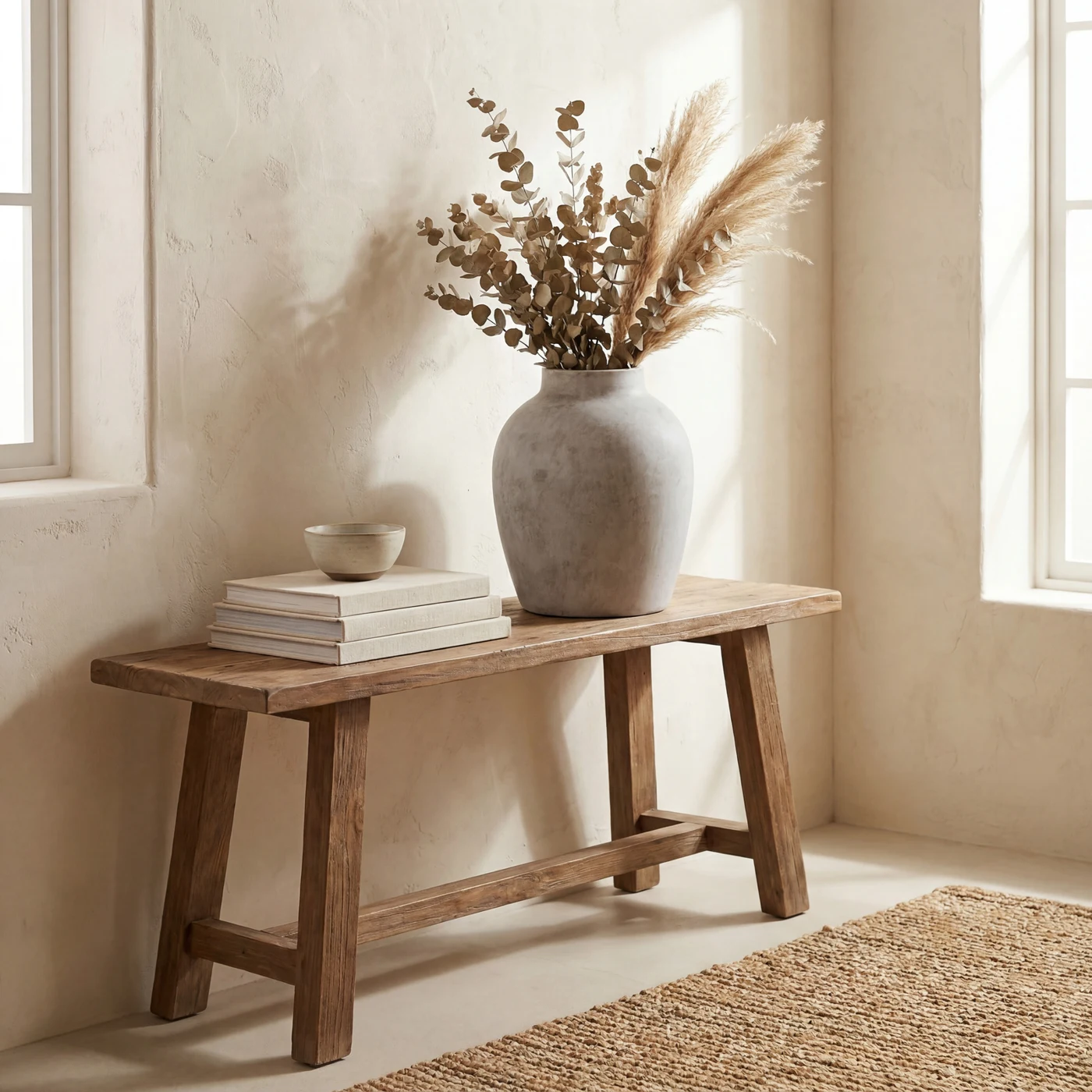
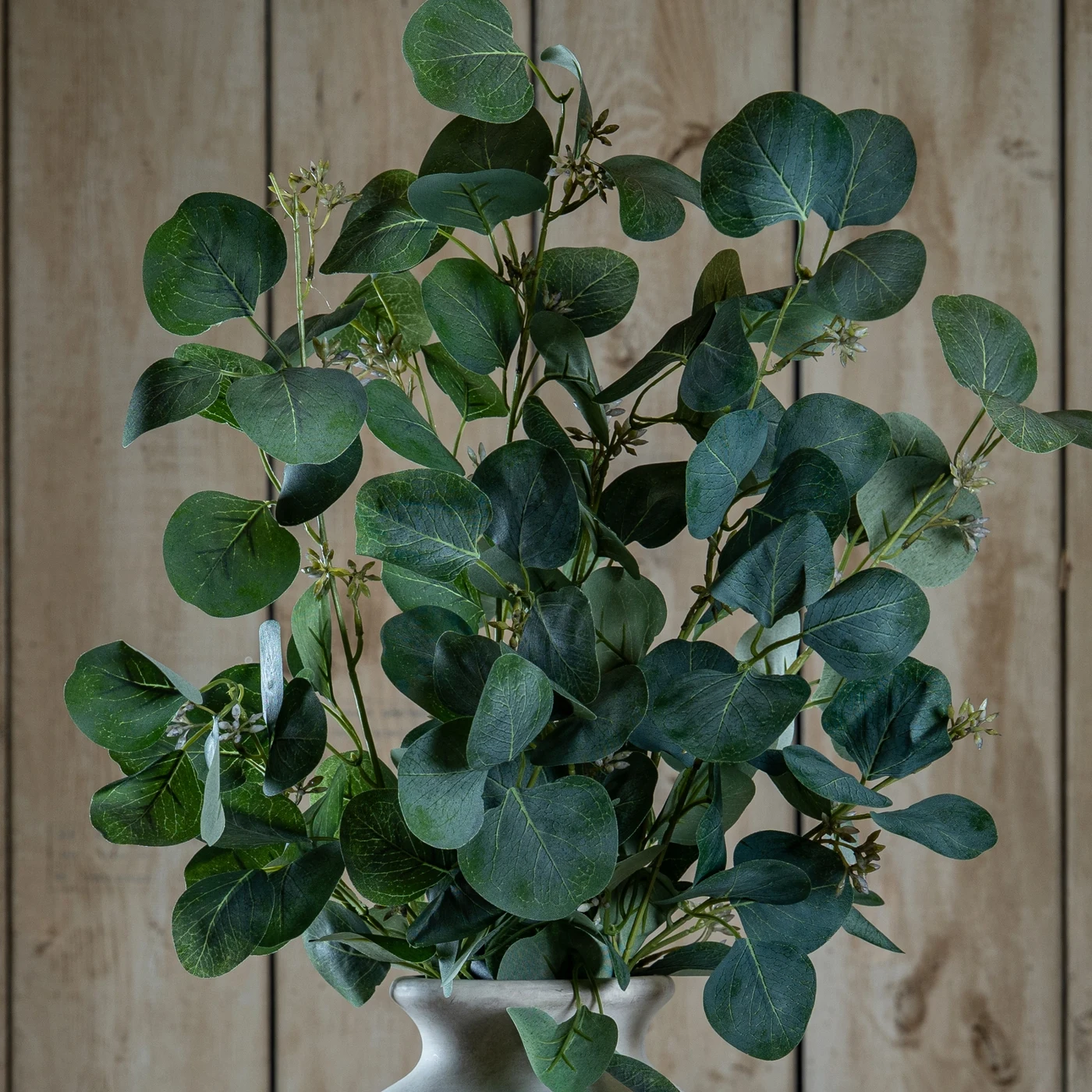
Greenery gives a still life movement. Loose stems soften the edge of a console, interrupt a row of books or bring a little height to a table. Eucalyptus-style foliage works particularly well with warm neutrals because its silvery green reads gently against stone, cream and brown.
Choose the vase first
Think about the surface it will sit on. A narrow shelf calls for a different footprint from a large dining table. Check the vase dimensions, its stability and the width of its opening. A substantial vessel can support a generous arrangement, but it should not dominate the place where you need to work or eat.
A ceramic vase with a weathered finish brings texture even when empty. Check whether it is watertight before using fresh stems. Some decorative vessels require a suitable waterproof liner; a stone-like appearance does not tell you how a vessel should be used.
Build loosely
Start with a small number of stems. Turn each one until the foliage faces naturally in a different direction, then vary the height slightly. If the product allows its stems to be shaped, work gently and follow the manufacturer's guidance. Aim for an arrangement with a little space between branches.
Look from the doorway as well as close up. The overall outline usually matters more than an individual leaf. Leave a clear view across a dining table, and make sure a hallway arrangement does not catch coats or bags as people pass.
Read the product quantity carefully
Styled photographs often show several stems together. Check whether a listing is for one spray, a bundle or a finished arrangement, and whether the vase is included. Buying the correct number is easier once you know what the image actually represents.
Keep it looking considered
Dust artificial foliage as directed and keep it away from flames and heat. Rotate the arrangement when you clean the surface underneath. Small adjustments are often enough: a different angle, a slightly lower stem or a simpler grouping beside it.