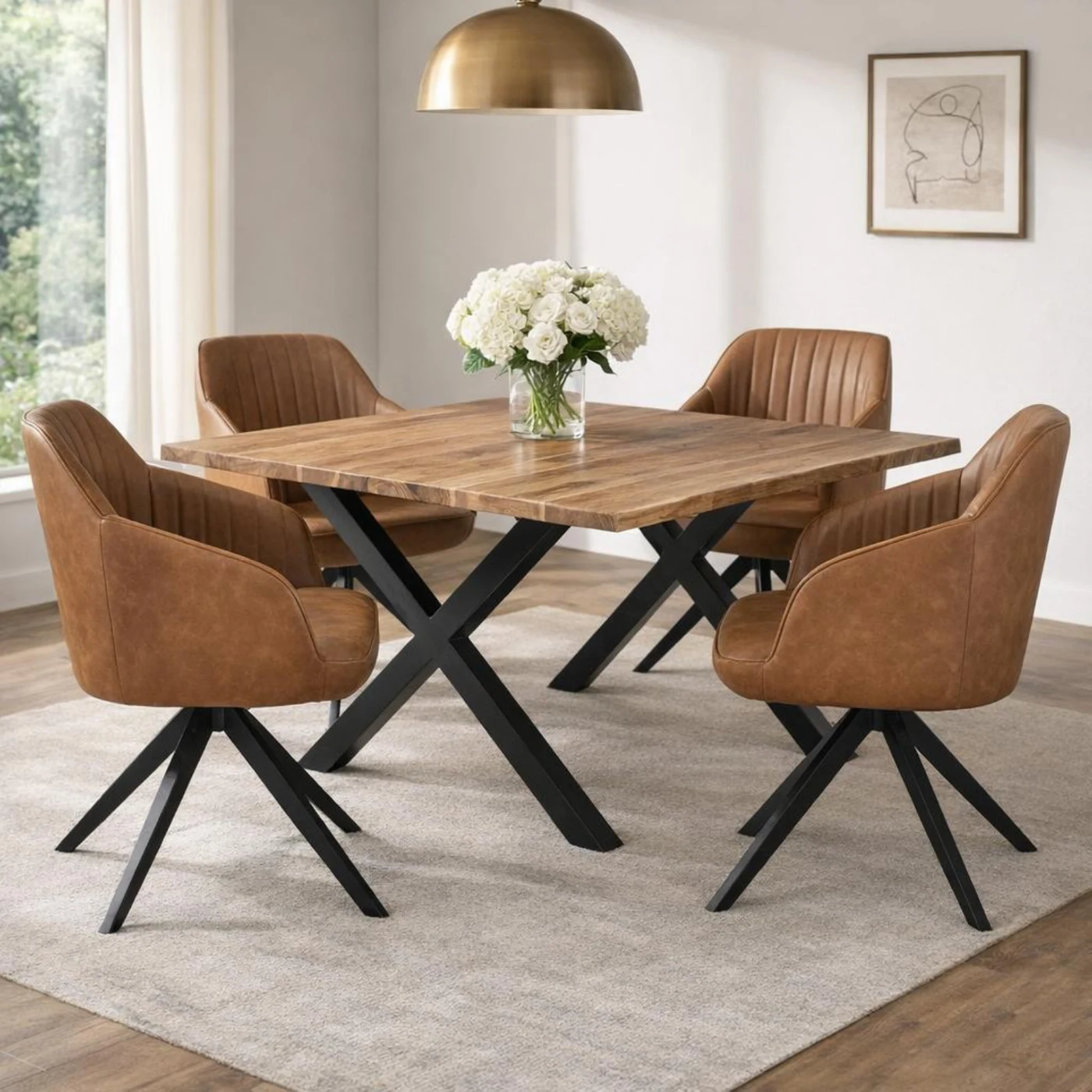
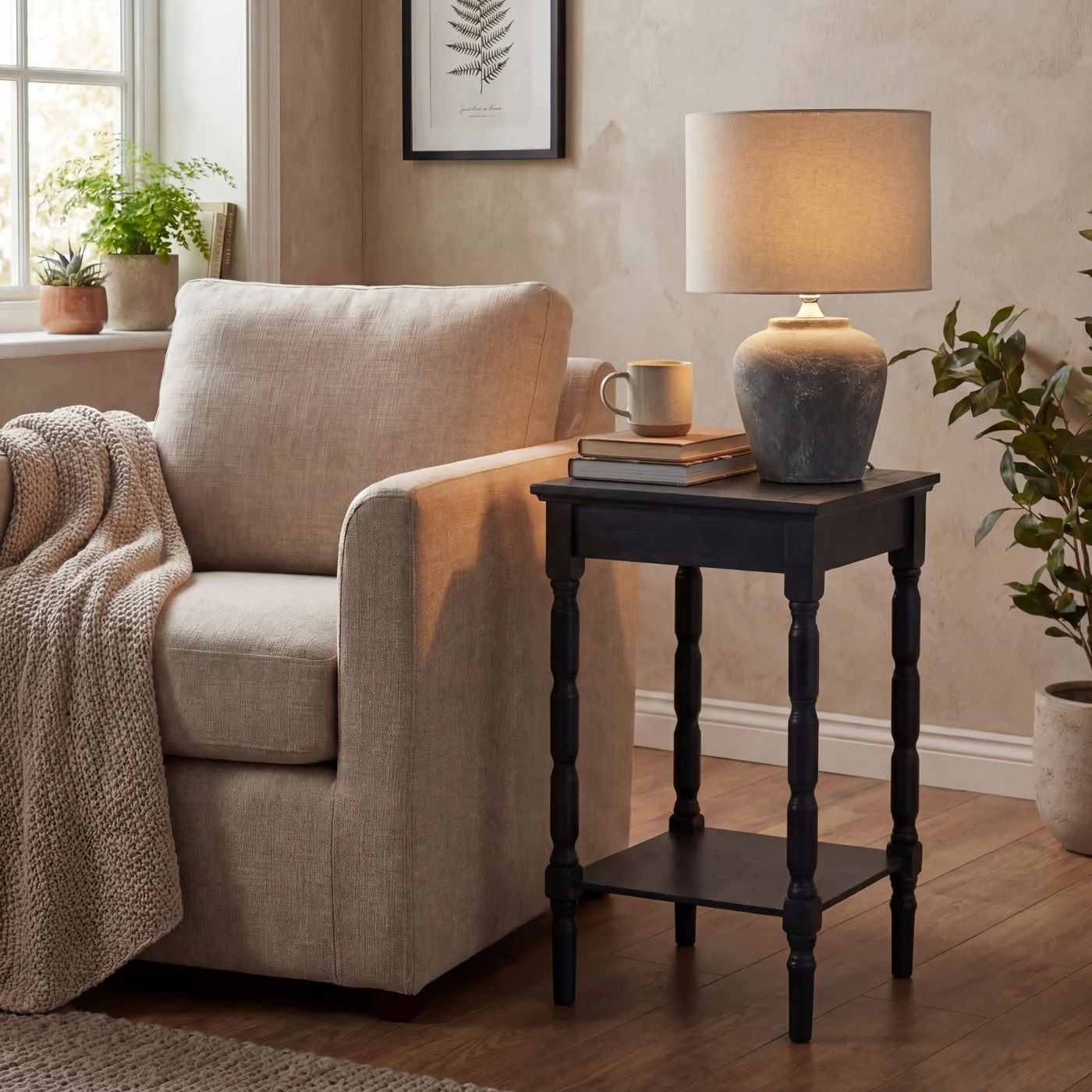
As evenings draw in, the same room can feel entirely different after sunset. A ceiling light that is useful during a busy day may feel too direct when you sit down to read. Making a room cosy often starts with choosing where light falls.
Light the activity
Notice what you want to do in each place. Reading needs useful light on the page. A hallway needs a clear route. A quiet corner may only need a soft pool of light nearby. Start with those activities rather than adding lamps simply to fill surfaces.
Look at the shade as well as the base
A shade influences both the look of a lamp and how its light spreads. A neutral textile shade can sit comfortably beside wood, textured ceramics and soft furnishings. Check the full height and width of the assembled lamp, including its shade, before choosing a table.
Leave space so the lamp feels secure. Keep cords out of walking routes and away from places where children or pets could pull them. Always follow the manufacturer's placement and electrical instructions.
Choose a compatible bulb
Check the fitting, the maximum permitted wattage and any restrictions stated by the manufacturer. If you want dimming, confirm that the lamp, bulb and dimmer are compatible. Do not assume a bulb comes with the lamp unless the listing says so.
Work with the room you have
A lamp can help bring an existing chair back into use, or make a sideboard feel more welcoming. You do not need to replace every light at once. Try one position, live with it for a few evenings and adjust before buying more.
As with furniture, simple choices work best when they are useful. A room becomes inviting through the small routines it supports: a book within reach, a clear table and enough light to enjoy the evening.